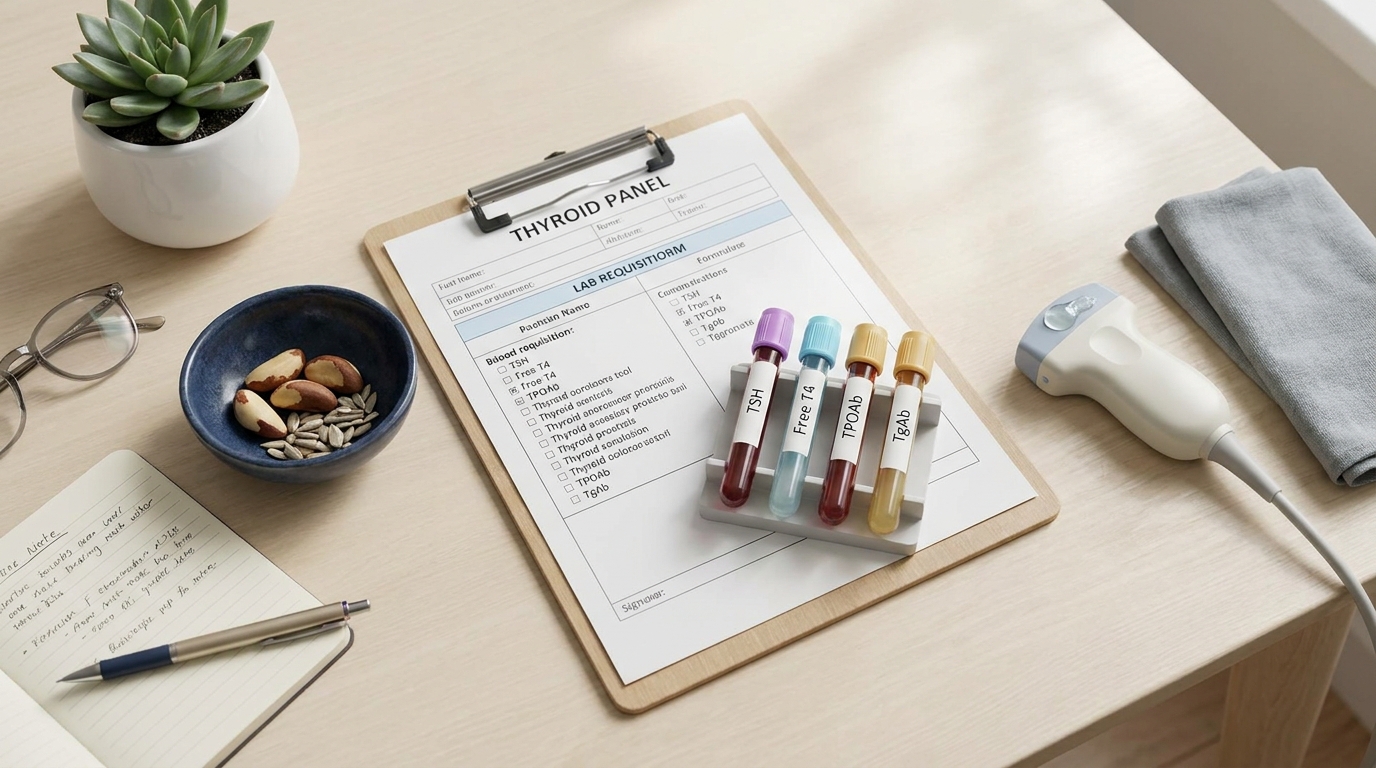

Menopause weight gain that won't budge despite clean eating and regular workouts usually isn't a willpower problem — it's a hormone and metabolic problem that standard bloodwork rarely catches. Functional medicine for menopause weight gain works by testing the systems conventional panels skip: sex hormones, thyroid, insulin, cortisol, and gut function, then building a protocol around what's actually driving the resistance.
- Menopause weight gain functional medicine starts with testing insulin, cortisol, thyroid, and sex hormones, not another calorie-restricted diet.
- DUTCH hormone panels and full thyroid panels catch what a single TSH test misses. Buy into the full panel, skip TSH-only screening.
- HOMA-IR and fasting insulin testing flag insulin resistance years before glucose numbers move. Worth doing for most women over 45.
- Generic weight-loss plans without baseline labs are a Skip for perimenopausal and menopausal women.
- Protocols built on lab data typically show measurable shifts by 12 weeks, with fuller metabolic changes by six months.
Why this matters
A woman in perimenopause or menopause can eat 1,400 calories a day, walk 8,000 steps, and still gain weight around the midsection. Estrogen decline changes where fat gets stored and how insulin behaves, and if cortisol is elevated from years of unmanaged stress, the body holds onto fat as a protective response regardless of diet effort.
Conventional care in 2026 still leans on a TSH test and a BMI chart. That misses insulin resistance, subclinical thyroid dysfunction, and adrenal dysregulation — the three drivers functional medicine testing is built to catch. Naturamed treats menopause weight gain as a root-cause investigation, not a calorie math problem.
Who this is for
This guide is for women roughly 42 to 58 who've noticed weight gain — particularly around the abdomen — that started or accelerated with perimenopause or menopause, despite diet and exercise habits that used to work. If your labs have come back "normal" while you still feel exhausted, foggy, and unable to lose weight, you're the exact profile functional medicine testing is designed for.
What to look for in functional medicine for menopause weight gain
A full hormone panel, not just estrogen
Estrogen gets blamed for everything in menopause, but progesterone, testosterone, and their metabolites all shift during this transition and all affect fat storage and mood. A panel that only checks estradiol misses the interplay that actually explains symptoms like stubborn belly fat and disrupted sleep.
Thyroid testing beyond TSH alone
Standard TSH reference range runs roughly 0.4 to 4.0 mIU/L, and a result sitting at 3.8 gets called "normal" even though a woman functions better closer to 1.5–2.0. A complete panel adding Free T3, Free T4, and thyroid antibodies catches subclinical hypothyroidism and autoimmune thyroid activity that TSH alone will not flag.
Insulin and metabolic testing
Fasting glucose can look fine for years while fasting insulin climbs, and by the time glucose numbers move, insulin resistance has usually been active for a decade. HOMA-IR calculated from fasting glucose and insulin gives a much earlier, more accurate read on metabolic weight-loss resistance.
Cortisol and adrenal rhythm
Chronic stress keeps cortisol elevated, which drives fat storage specifically in the abdomen and interferes with sleep — and poor sleep drives more cortisol. A four-point saliva or urine cortisol test across the day shows whether the rhythm is flattened or spiked, something a single morning blood draw can't show.
Gut health and inflammation markers
Gut dysfunction — including SIBO and dysbiosis — drives systemic inflammation that worsens insulin resistance and bloating that gets mistaken for weight gain. Testing here matters especially when digestive symptoms accompany the weight changes.
A protocol built for your numbers, with a real timeline
Generic advice to "eat less, move more" ignores what the labs show. A workable plan states what's being addressed, what changes at 12 weeks, and what a six-month reassessment looks like.
What a root-cause testing and protocol plan actually includes
DUTCH hormone panel — the estrogen/progesterone decoder. This test measures hormone metabolites through urine rather than a single blood snapshot, giving a fuller picture of estrogen dominance or progesterone deficiency patterns common in perimenopause. Buy if you have cycle irregularity, night sweats, or mood swings alongside the weight gain — it's the single most information-dense hormone test available.
Comprehensive thyroid panel — the one most doctors skip. Beyond TSH, this includes Free T3, Free T4, reverse T3, and thyroid antibodies, catching subclinical and autoimmune thyroid patterns that a 3.8 mIU/L "normal" TSH would hide. Buy for anyone with cold intolerance, hair thinning, or fatigue on top of the weight resistance.
Fasting insulin and HOMA-IR — the metabolic gatekeeper. This flags insulin resistance well before fasting glucose crosses a diabetic threshold, often years earlier. Buy if weight is concentrated around the midsection and carb cravings have gotten worse since your mid-40s.
Four-point cortisol testing — the stress hormone check. Saliva or urine testing across morning, noon, evening, and night shows whether cortisol is flattened, spiked at night, or chronically elevated. Consider this one if sleep has fallen apart or stress has been constant for more than a year — it's a strong add-on, not always a first step.
Gut microbiome or SIBO breath testing — the overlooked driver. This identifies bacterial overgrowth and dysbiosis that quietly worsens inflammation and bloating. Consider if bloating, irregular digestion, or food sensitivities showed up around the same time as the weight gain; skip as a first move if digestion has been stable.
Get your hormones tested properly
Root-cause testing and a protocol built around your labs, not a generic diet plan.
What to avoid
- TSH-only thyroid screening. A single TSH result within "normal" range gets used to rule out thyroid involvement entirely, even when Free T3 and antibodies tell a different story.
- Generic 1,200-calorie diet plans. These plans assume every woman's metabolism behaves the same way; for someone with insulin resistance, aggressive calorie restriction can slow metabolism further and worsen cortisol.
- Hormone pellets or patches without baseline testing. Starting hormone therapy without a DUTCH panel or comparable baseline means there's no way to know if dosing is correcting an imbalance or creating a new one.
Verdict comparison
| Test/Approach | What it catches | Best for | Verdict |
|---|---|---|---|
| DUTCH hormone panel | Estrogen/progesterone metabolite patterns | Cycle changes, night sweats, mood swings | Buy |
| Comprehensive thyroid panel | Subclinical/autoimmune thyroid issues | Fatigue, cold intolerance, hair thinning | Buy |
| Fasting insulin/HOMA-IR | Early insulin resistance | Midsection weight, carb cravings | Buy |
| Four-point cortisol testing | Cortisol rhythm disruption | Poor sleep, chronic stress | Consider |
| Gut microbiome/SIBO testing | Dysbiosis, inflammation | Bloating, digestive symptoms | Consider |
| Generic calorie-restriction diet | Nothing hormone-specific | No one with insulin resistance | Skip |
FAQ
What is functional medicine for menopause weight gain?
It's an approach that tests hormones, thyroid, insulin, and cortisol to find the specific driver behind weight resistance, then builds a treatment protocol around those results instead of a generic diet plan. Naturamed uses testing panels like DUTCH hormone tests and comprehensive thyroid panels as the starting point.
Why can't I lose weight during menopause even with diet and exercise?
Declining estrogen changes fat storage patterns and often triggers insulin resistance, while elevated cortisol from stress compounds the effect. Standard bloodwork with a normal TSH and normal glucose can miss all three drivers.
Is a DUTCH test better than a standard hormone blood panel?
A DUTCH panel measures hormone metabolites and gives a fuller pattern of estrogen and progesterone activity than a single blood draw. It's particularly useful for women with irregular cycles or mood symptoms alongside weight gain.
How much does functional medicine testing for menopause cost?
Costs vary by which panels are ordered and whether insurance covers any lab work, so check current pricing directly with the clinic. Comprehensive panels covering hormones, thyroid, and metabolic markers typically cost more upfront than a standard doctor visit but replace multiple rounds of trial-and-error testing.
How long before I see results from a root-cause weight loss protocol?
Most protocols show measurable changes by 12 weeks, with fuller metabolic and hormone shifts visible around the six-month mark in 2026 treatment timelines. Results depend on which imbalances are found and how consistently the protocol is followed.
Can insulin resistance cause menopause weight gain even with normal blood sugar?
Yes. Fasting insulin often rises years before fasting glucose moves out of range, which is why HOMA-IR testing catches resistance that a standard glucose test misses entirely.
Does cortisol testing matter if I'm not stressed?
Cortisol rhythm can flatten or spike from years of accumulated stress even when someone no longer feels acutely stressed day to day. A four-point saliva test shows the pattern regardless of how stress feels subjectively.
Is telemedicine an option for functional medicine testing?
Naturamed offers telemedicine consultations for patients in Florida, Michigan, and Texas, alongside in-person visits in Maitland and Orlando, Florida.
One last thing
The detail most women miss: a "normal" TSH between 2.5 and 4.0 mIU/L can still mean symptomatic subclinical hypothyroidism, and that range alone has stalled more menopause weight-loss efforts in 2026 than any diet mistake. If your last thyroid test was TSH-only, that's the first gap to close before changing anything else.