
Irregular periods rarely fix themselves, and guessing which hormone is misbehaving wastes months you don't have. This guide breaks down which hormone tests actually explain cycle irregularity, what a normal-looking lab report can still be hiding, and which panels are worth your money in 2026.
- Day 3 and day 21 blood draws catch most ovulation problems that cause irregular periods.
- A DUTCH or serum cortisol panel explains cycles a standard hormone panel calls normal.
- Fasting insulin and HOMA-IR matter more than a single glucose reading for PCOS-pattern cycles.
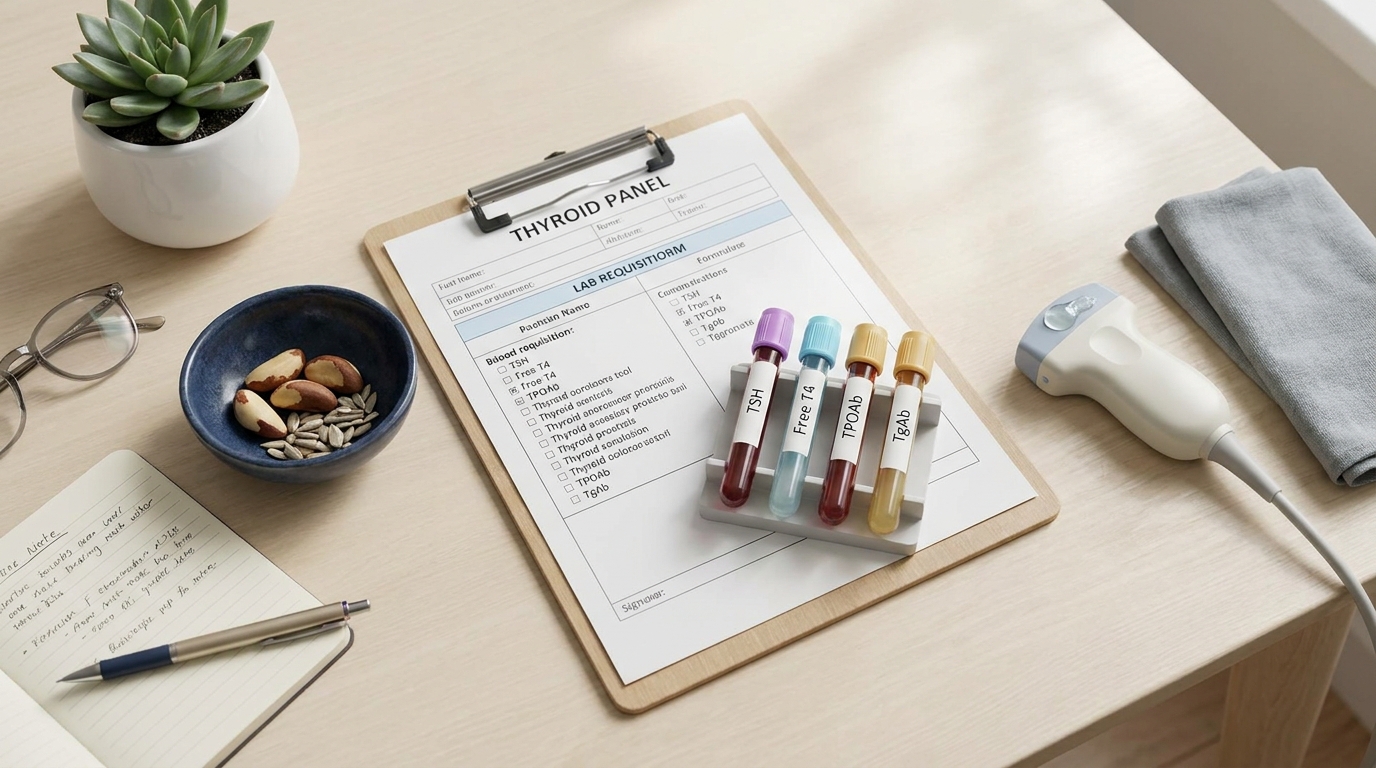
- Thyroid testing needs TSH, free T3, free T4, and TPO antibodies together, not TSH alone.
- Hormone testing for irregular periods works best when timed to your actual cycle day, not a random appointment slot.
Why this matters
A period that shows up every 45 days, skips months, or floods without warning is a symptom, not a diagnosis. Estrogen, progesterone, LH, FSH, prolactin, thyroid hormones, cortisol, and insulin all talk to each other, and a disruption in one shows up as chaos in your cycle.
The problem: most standard workups check TSH and maybe estradiol on a random day, call it normal, and stop. Functional hormone testing for irregular periods times the draws to your cycle and adds the markers conventional panels skip, which is often where the real answer lives.
Who this is for
This guide is for women in their 20s through late 40s whose cycles have stretched past 35 days, shortened under 21, disappeared for months, or turned unpredictable after a normal-labs conversation with a doctor. It's also for women managing perimenopause symptoms, PCOS-pattern cycles, or post-birth-control irregularity who want a testing roadmap before booking another appointment. If you've been told your labs are fine but your cycle says otherwise, Naturamed builds testing around your actual symptoms and cycle timing rather than one generic panel.
What to look for in hormone testing for irregular periods
Cycle-day timing, not a random draw
Progesterone drawn on the wrong day reads low even in a healthy cycle, because it peaks roughly 7 days after ovulation. A day 21 draw only works if you ovulate on day 14; for a 35-day cycle, day 28 is more accurate. Testing on the wrong day is the single biggest reason irregular-cycle labs get misread as normal.
Full thyroid panel, not TSH alone
TSH sits in a "normal" reference range of roughly 0.4 to 4.0 mIU/L at most labs, but a functional range closer to 1.0 to 2.0 mIU/L is where most women feel and cycle normally. Free T3, free T4, and TPO antibodies catch autoimmune thyroid activity and conversion problems that TSH alone misses entirely.
Androgen and insulin markers for PCOS-pattern cycles
If cycles run 40+ days with acne, scalp thinning, or stubborn weight gain, testosterone, DHEA-S, and fasting insulin matter more than estrogen or progesterone alone. A HOMA-IR score above 2.0 signals insulin resistance driving the irregularity, not a hormone problem in isolation.
Cortisol pattern across the day
A single morning cortisol blood draw misses the pattern that actually disrupts cycles. A 4-point saliva or DUTCH cortisol curve shows whether cortisol stays elevated at night or crashes by afternoon, both of which suppress ovulation through the same stress-axis pathway.
AMH and FSH for perimenopause questions
An AMH under 1.0 ng/mL paired with FSH climbing above 10 mIU/L on day 3 points toward declining ovarian reserve, which explains cycles shortening or skipping in the late 30s and 40s. Testing both together avoids misreading normal perimenopause shifts as a thyroid or stress problem.
Prolactin, especially with irregular cycles and any nipple discharge
Prolactin above roughly 25 ng/mL outside pregnancy or breastfeeding can suppress ovulation on its own, and it's a marker conventional panels sometimes skip entirely. It's a five-minute blood draw that rules out a specific, treatable cause before chasing anything else.
Top picks: which panels to run first
The baseline — Day 3 and Day 21 hormone panel. Checks FSH, LH, estradiol, and progesterone timed to cycle days that actually reflect ovulation status. Catches roughly 60-70% of ovulatory-pattern irregularities when timed correctly. Order this first if you've never had cycle-timed labs before.
The overlooked one — full thyroid panel with antibodies. TSH, free T3, free T4, and TPO antibodies run together instead of TSH alone. Subclinical thyroid dysfunction shows up in this panel years before TSH crosses standard reference thresholds. Order this alongside the baseline, not after it, since thyroid and cycle hormones interact directly.
The metabolic check — fasting insulin and HOMA-IR. Matters specifically for cycles running 40+ days with acne or weight resistance. A fasting insulin above 10 uIU/mL paired with normal glucose is the pattern conventional panels miss because they only check glucose. Consider this if PCOS-pattern symptoms are present; skip it if cycles are short and regular with no metabolic symptoms.
The deep dive — DUTCH or 4-point cortisol testing. Maps cortisol across the full day instead of one static number. Useful when cycles went irregular after a stressful year, a major illness, or a period of under-eating. Consider this as a second-line test after the baseline and thyroid panel come back inconclusive.
The perimenopause check — AMH plus day 3 FSH. Specifically useful for women in their late 30s and 40s whose cycles have shortened or become unpredictable. An AMH under 1.0 ng/mL with FSH above 10 mIU/L points toward ovarian reserve decline rather than a reversible hormone imbalance. Order this if age and cycle-shortening pattern both fit; skip it in your 20s unless there's a specific reserve concern.
What to avoid
- A single random-day estrogen and progesterone draw. It looks thorough on paper but tells you almost nothing if it isn't timed to your actual cycle length.
- TSH-only thyroid screening. It's the most common gap in irregular-period workups and misses autoimmune thyroid activity that TPO antibodies would catch.
- Skipping insulin markers because glucose looks normal. Fasting insulin can be elevated for years before glucose numbers move, and that gap is exactly where PCOS-pattern irregularity hides.
“Normal on a standard panel doesn't mean normal for your cycle.”
Verdict comparison
| Panel | Best for | Key marker to watch | Verdict |
|---|---|---|---|
| Day 3/21 hormone panel | First-time irregular cycle workup | Progesterone timed to ovulation | Order first |
| Full thyroid panel | Any irregular cycle, any age | TPO antibodies, free T3/T4 | Order alongside baseline |
| Fasting insulin/HOMA-IR | PCOS-pattern symptoms | HOMA-IR above 2.0 | Consider if symptoms fit |
| DUTCH/cortisol curve | Stress-linked cycle changes | Nighttime cortisol elevation | Consider second-line |
| AMH + day 3 FSH | Late 30s/40s cycle shortening | AMH under 1.0 ng/mL | Order if age fits |
Get your cycle-specific labs ordered
Root-cause testing timed to your cycle, not a random appointment slot.
FAQ
What hormone tests explain irregular periods?
A cycle-timed panel checking FSH, LH, estradiol, and progesterone on days 3 and 21 explains most ovulation-related irregularity. Full thyroid testing with antibodies and, for PCOS-pattern cycles, fasting insulin round out the picture.
Can normal labs still mean a hormone imbalance?
Yes, standard reference ranges are wide and a single random-day draw often misses timing-dependent problems. Progesterone drawn on the wrong cycle day, or TSH checked without antibodies, can both read normal while a real imbalance drives the irregularity.
Is a DUTCH test better than a standard cortisol test?
A DUTCH test or 4-point cortisol curve shows the pattern across the day, while a single morning cortisol draw only captures one moment. For cycles disrupted by chronic stress, the pattern matters more than one number.
How much does hormone testing for irregular periods cost in 2026?
Costs vary by clinic and whether insurance covers functional panels, so confirm current pricing directly with the provider before booking. Comprehensive panels combining hormones, thyroid, and metabolic markers typically cost more than a single insurance-covered blood draw.
What cycle day should I get progesterone tested?
Progesterone should be drawn roughly 7 days after ovulation, which is day 21 for a 28-day cycle but later for longer cycles. Testing on a fixed day 21 regardless of cycle length is the most common timing mistake.
Does thyroid dysfunction cause irregular periods?
Yes, both an underactive and overactive thyroid can lengthen, shorten, or stop cycles entirely. TSH alone can miss this, which is why free T3, free T4, and TPO antibodies need to be checked together.
Is PCOS the only cause of irregular periods?
No, thyroid dysfunction, elevated prolactin, high cortisol, and perimenopause-related ovarian reserve decline all cause irregular cycles independent of PCOS. Insulin resistance testing helps distinguish a PCOS pattern from these other causes.
When should I test AMH for irregular periods?
AMH testing is most useful in the late 30s and 40s when cycles are shortening or skipping, since it reflects ovarian reserve. Paired with a day 3 FSH, it distinguishes perimenopause-related changes from a reversible hormone imbalance.
One last thing
Most women get one blood draw, hear "normal," and stop looking, when the actual gap is timing, not the lab work itself. A progesterone level that's low on day 21 might be perfectly normal on day 28 for someone with a 35-day cycle, and that single detail changes the entire diagnosis. Before accepting another "normal" result in 2026, ask which cycle day the draw was timed to.